 Fierce Guardianship & Double the Cuteness
THE POWER OF LOVE – WHEN NATURE SPEAKS THROUGH SILENCE
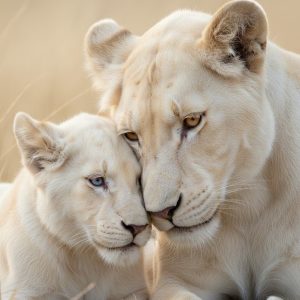
In the vast and often unforgiving world of the wild, there are moments that require no movement, no dramatic action, and no sound to leave a lasting impression. Some images speak not through intensity, but through stillness. The photograph of a lioness gently pressing her face against her cub is one such moment—quiet, intimate, and profoundly powerful. It tells a story not of roaring dominance or fierce hunting, but of maternal love, protection, and unbreakable trust.
Lions have long been symbols of strength, courage, and authority. Known as the rulers of the savannah, they embody raw power and survival. Yet behind this formidable image lies another truth—one often overlooked—the world of tenderness, patience, and care. In this photograph, the lioness does not display her strength through aggression. Instead, her power is expressed through calm presence, steady composure, and unwavering protection. Without a single threatening gesture, she becomes a living shield for her young.
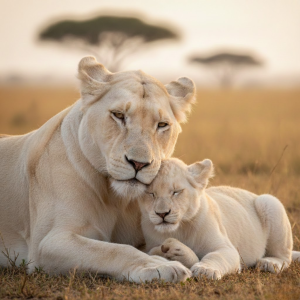
The cub leans closely into its mother, resting its face against hers. This simple gesture carries deep meaning. It is an expression of absolute trust, of safety found in closeness. In that moment, the dangers of the wild—predators, hunger, and uncertainty—fade into the background. What remains is warmth, connection, and a sense of belonging. The cub does not need to be alert or afraid; its mother’s presence is enough.
One of the most striking elements of this image is its emotional tone. The pale, almost white fur of both the lioness and her cub creates a sense of purity and softness. This gentle coloring contrasts sharply with the typical image of lions as fierce and dominant predators. Instead of intimidation, the photograph radiates calm and grace. This contrast invites reflection: true strength does not always roar. Sometimes, it exists quietly in the act of protecting another.
The lioness’s eyes deserve special attention. They reflect experience and awareness—an understanding of the dangers that exist beyond the frame. Yet there is no fear in her gaze. It is steady, grounded, and resolute. She does not need to scan the horizon aggressively to fulfill her role as protector. Her stillness alone communicates readiness and responsibility. In this way, she represents motherhood in its purest form—not only in the animal kingdom, but across all forms of life.
The cub, small and vulnerable, symbolizes new life and untapped potential. Its soft features and relaxed posture show complete dependence on its mother. Yet within this fragility lies the promise of future strength. One day, this cub will grow into a powerful lion, capable of surviving on its own. The foundation for that future, however, is built here—in moments of safety, affection, and unconditional care. Love becomes the first lesson in survival.
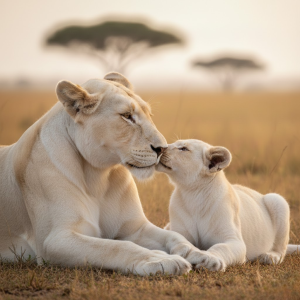
Wild nature is often portrayed as cruel and merciless, governed solely by the law of strength. While this perspective holds some truth, it is incomplete. This photograph reminds us that the natural world is also shaped by connection, emotion, and sacrifice. The lioness must constantly face hunger, exhaustion, and threats to her life, yet her instincts drive her to place her cub above all else. Her role is not only to hunt and defend, but to nurture and prepare.
On a deeper level, this image resonates strongly with human experience. In an unpredictable and fast-moving world, people seek the same sense of safety and reassurance that the cub finds beside its mother. Whether through family, loved ones, or trusted relationships, we all long for a space where we can rest without fear. In this way, the photograph transcends species—it becomes a reflection of our own emotional needs and bonds.
The silence within the image is equally powerful. There is no motion, no urgency, no visible threat. This stillness allows the viewer to pause, to feel rather than analyze. In a world saturated with noise and constant stimulation, such quiet moments are rare and deeply meaningful. They remind us of the importance of slowing down, of being present, and of recognizing the beauty in simple connection.
The closeness between mother and cub also symbolizes continuity and legacy. The lioness is not only protecting her child in the present moment, but safeguarding the future. Every act of care contributes to the survival of the species. This idea mirrors human life, where love, guidance, and protection shape the generations to come. What we nurture today becomes the strength of tomorrow.
There is also an undeniable sense of balance in the image—between power and gentleness, strength and vulnerability. The lioness embodies both protector and nurturer, warrior and caregiver. This duality challenges the notion that strength must be harsh. Instead, it suggests that the most enduring form of power is the ability to protect without destroying, to lead without fear, and to love without condition.
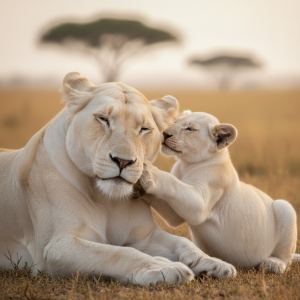
Ultimately, the photograph stands as a quiet affirmation that love is the most fundamental force in nature. It exists beyond language, beyond species, and beyond conscious choice. Whether in the wild or in human society, love is what sustains life, fosters growth, and creates meaning. It is the invisible bond that transforms survival into purpose.
The image speaks without words, yet its message is complete. It tells a story of protection, trust, and gentle strength. And as we look at it, what lingers most is not the identity of the lion, but a familiar, comforting feeling—the feeling of being safe, of being held, and of being deeply loved.